$23.75
$44.41
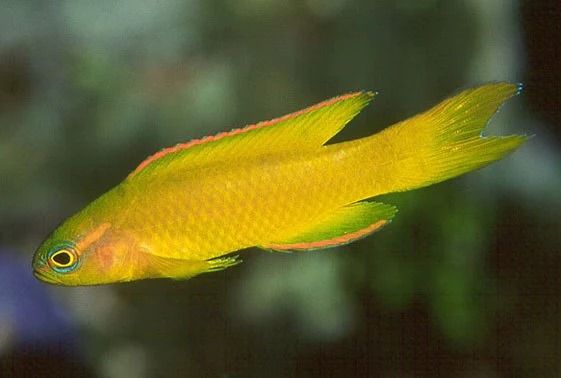
Yellow/Gold Assessor Basslet Also known as the Yellow Devilfish or Golden Assessor The Yellow Assessor Basslet is a stunning and relatively rare species that captivates aquarists with its brilliant golden-yellow coloration and unique cave-dwelling behavior. Native to deep reef environments in the Western Pacific, particularly around Fiji and Tonga, this peaceful species spends much of its time swimming upside down beneath ledges and cave ceilings. Their striking appearance, hardy nature, and fascinating behavioral quirks make them highly sought-after additions to reef aquariums. While somewhat shy initially, they become bold and personable once established, often developing interactive relationships with their owners. Key Features Scientific Name: Assessor flavissimus Common Names: Yellow Assessor, Gold Assessor, Yellow Devilfish, Golden Assessor Basslet Adult Size: 2.5–3 inches (6–8 cm) Lifespan: 5–8 years with proper care Temperament: Peaceful; may be semi-aggressive toward conspecifics in smaller tanks Reef Compatibility: Completely reef-safe – will not harm corals or invertebrates Minimum Tank Size: 30 gallons (50 gallons recommended for groups) Experience Level: Beginner to Intermediate – hardy once established Habitat & Tank Requirements Natural Habitat: Found in deep caves, overhangs, and crevices on outer reef slopes at depths of 30–200 feet. They inhabit dark, protected environments and are almost always observed swimming inverted along cave ceilings, a behavior that persists in captivity. Tank Environment: Multiple caves, overhangs, and deep crevices absolutely essential Dim to moderate lighting (they prefer shadowed, darker areas) Live rock structures creating cave-like formations Provide horizontal “ceiling” surfaces under overhangs Peaceful, stress-free environment Moderate water flow with calm refuges Stable, established aquarium (2 months recommended) Deeper caves encourage natural inverted swimming behavior Water Parameters: Temperature: 72–78°F (22–26°C) Salinity: 1.023–1.025 specific gravity pH: 8.1–8.4 Ammonia/Nitrite: 0 ppm Nitrate: <20 ppm (lower is better) Alkalinity: 8–12 dKH Essential Equipment: Quality protein skimmer (for tanks over 40 gallons) Adequate biological and mechanical filtration Subdued or adjustable lighting system Regular water changes (10–15% weekly or 20% biweekly) Cave structures or PVC pipe alternatives if natural caves unavailable Diet & Feeding Yellow Assessor Basslets are carnivores with excellent appetites, readily accepting most meaty aquarium foods once acclimated. Recommended Foods: Frozen Foods: Mysis shrimp, brine shrimp, cyclops, finely chopped krill, enriched copepods (primary diet) Pellets/Flakes: High-quality marine carnivore pellets, color-enhancing formulas (supplementary) Live Foods: Live brine shrimp, live copepods, live black worms (occasional, especially helpful during acclimation) Prepared Mixes: Carnivore blends, enriched frozen preparations Enrichment: Vitamin-soaked foods, garlic-enriched preparations for immune support Feeding Schedule: Feed 1–2 times daily Offer small portions they can consume in 2–3 minutes Target feeding may be necessary as they may be outcompeted by aggressive eaters Feed near cave entrances where they feel secure Variety maintains vibrant golden coloration and health May initially be shy feeders; patience during acclimation Behavior & Compatibility Temperament: Very peaceful toward most tankmates May be territorial toward other Assessor species or similar basslets Can be kept in pairs or small groups in larger tanks (50 gallons) Shy initially but becomes confident and bold once established Fascinating inverted swimming behavior captivates observers Often swims upside down 80–90% of the time Tank Mates: Compatible with: Clownfish, gobies, dartfish, firefish, blennies, cardinalfish, Royal Gramma, Chalk Bass, tangs, peaceful wrasses, anthias, chromis, small peaceful angelfish Caution with: Aggressive dottybacks, territorial basslets, aggressive damselfish, large predatory fish Avoid: Large groupers, lionfish, frogfish, aggressive triggers, eels, any fish large enough to consume them Social Behavior: Best kept singly in tanks under 50 gallons Pairs or small groups (3–5) work well in 75 gallon systems with multiple caves Conspecific aggression reduced when multiple caves available Establish territories but disputes are usually harmless displays Interesting hierarchy develops in groups Males and females coexist peacefully Reef Compatibility: Completely reef-safe; will not harm corals or invertebrates May perch on coral branches or cave walls but causes no damage Excellent choice for mixed reef aquariums Safe with all ornamental shrimp, snails, crabs, and cleanup crew Will not disturb sand bed or rockwork Acclimation & Care Tips Initial Acclimation: Use drip acclimation method over 60–90 minutes minimum Float bag for temperature equalization (15–20 minutes) Dim or turn off tank lights during introduction and for 24–48 hours after Will likely hide extensively for first 3–7 days (completely normal) Minimize stress and sudden movements near tank Patience is key; they become bold once comfortable Health Considerations: Generally hardy once established but can be sensitive during acclimation Can be susceptible to marine ich (Cryptocaryon) and marine velvet (Amyloodinium) when stressed Quarantine for 3–4 weeks before adding to display tank strongly recommended Watch for rapid breathing, flashing against rocks, loss of appetite, or excessive hiding May be outcompeted for food by aggressive feeders Deep-water species; avoid extremely bright lighting which causes stress Signs of a Healthy Specimen: Active swimming, primarily inverted under overhangs Clear, bright eyes with no cloudiness Brilliant golden-yellow coloration throughout body Eager feeding response once acclimated (may take several days) Smooth, intact fins with no tears or damage No visible spots, lesions, excess mucus, or parasites Natural hovering behavior near cave ceilings Alert and aware of surroundings Color & Development Coloration Characteristics: Body: Brilliant golden-yellow to lemon-yellow throughout Uniformity: Solid coloration with no patterns, bars, or spots Fins: Matching golden-yellow with slight transparency Eyes: Large, prominent with dark pupil and golden iris Intensity: One of the most intensely yellow fish in the hobby Distinguishing Feature: Blue to purple iridescent streak along lower jaw and operculum Color Intensity: High-quality varied diet maintains brilliant golden coloration Carotenoid and color-enhancing foods boost yellow pigmentation Proper subdued lighting enhances natural brilliance Stress or poor water quality causes temporary fading Nighttime coloration may pale slightly (normal) Among the most vibrantly yellow marine fish available Size & Growth: Juveniles typically available at 1.5–2 inches Reach adult size (2.5–3 inches) within 8–12 months Males and females similar in size Compact, elongated body shape remains consistent Relatively slow growth compared to other basslets Special Considerations Quarantine is Recommended: While Yellow Assessor Basslets are generally hardy once established, quarantine remains best practice to prevent introducing parasites or diseases to your display tank. Quarantined fish have been: Observed for 3–4 weeks minimum Monitored for signs of stress, illness, or parasites Acclimated to prepared aquarium foods and feeding routines Cleared of common marine parasites (ich, velvet, flukes) Gradually adapted to brighter lighting if necessary Conditioned to reduce stress before introduction Lighting Considerations: Deep-water species adapted to dim environments Very bright lighting (especially intense LED) may stress them initially Provide well-shaded areas and caves Gradually increase lighting intensity if upgrading (over weeks) Once established, tolerate moderate lighting well Subdued lighting brings out natural behavior Rarity and Availability: Significantly less common than Blue Assessors Collection limited to specific locations (primarily Fiji, Tonga) Often more expensive due to rarity Wild-caught specimens predominate (captive breeding rare) Worth the premium for collectors seeking unique species Why Choose a Quarantined Yellow Assessor Basslet? A properly quarantined Yellow Assessor Basslet is a healthier, stress-free specimen that is ready to thrive in your aquarium. Our quarantine protocol includes extended health observation for signs of common diseases and parasites, preventative treatment when necessary to eliminate ich, velvet, and flukes, dietary conditioning to ensure acceptance of all frozen and prepared foods, acclimation to appropriate lighting levels to reduce stress, behavioral assessment to ensure normal inverted swimming patterns, and proper acclimation procedures to minimize shock. This provides you with confidence and peace of mind that your new Assessor will be a long-term success story in your reef or FOWLR system. With their stunning golden-yellow coloration, fascinating upside-down swimming behavior, peaceful disposition, and remarkable hardiness once established, Yellow Assessor Basslets remain one of the most unique and rewarding species for aquarists seeking something truly special. Their rarity and captivating behavior make them prized additions to any peaceful community aquarium with appropriate cave structures.
Basslets