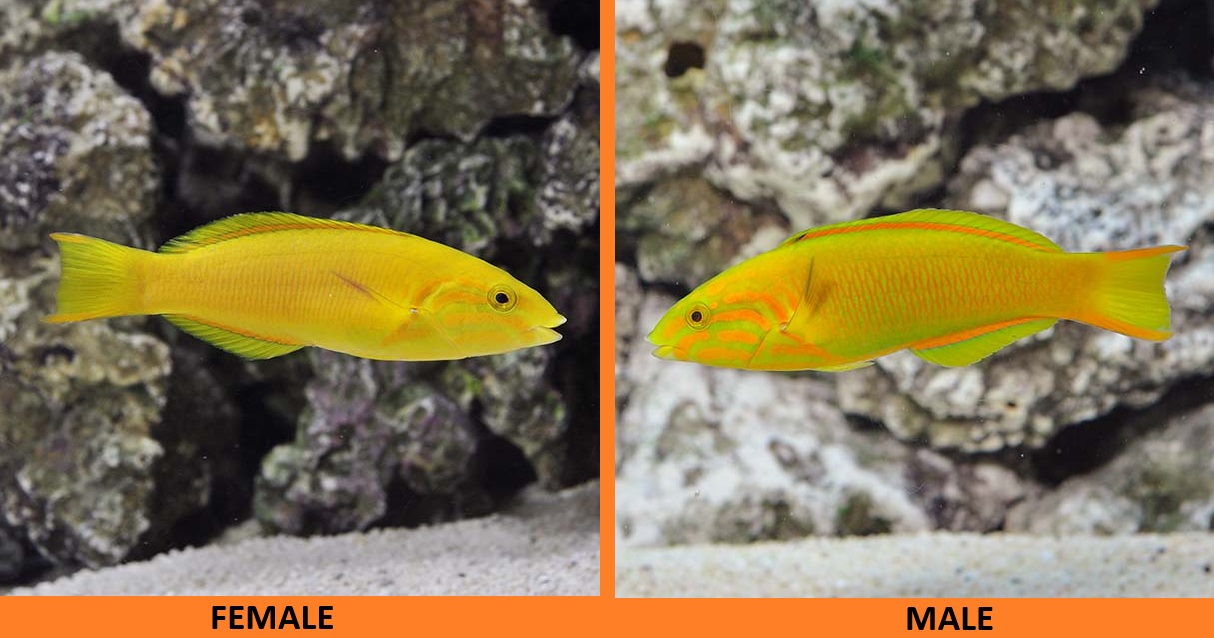
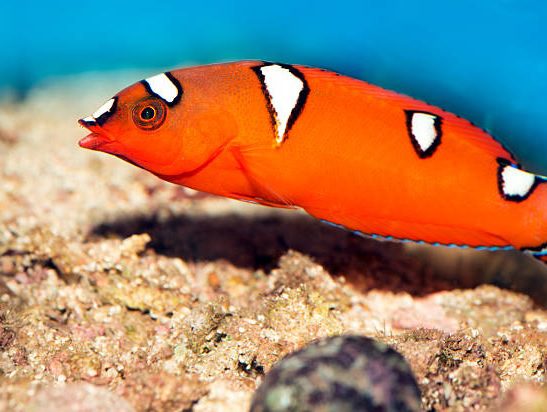
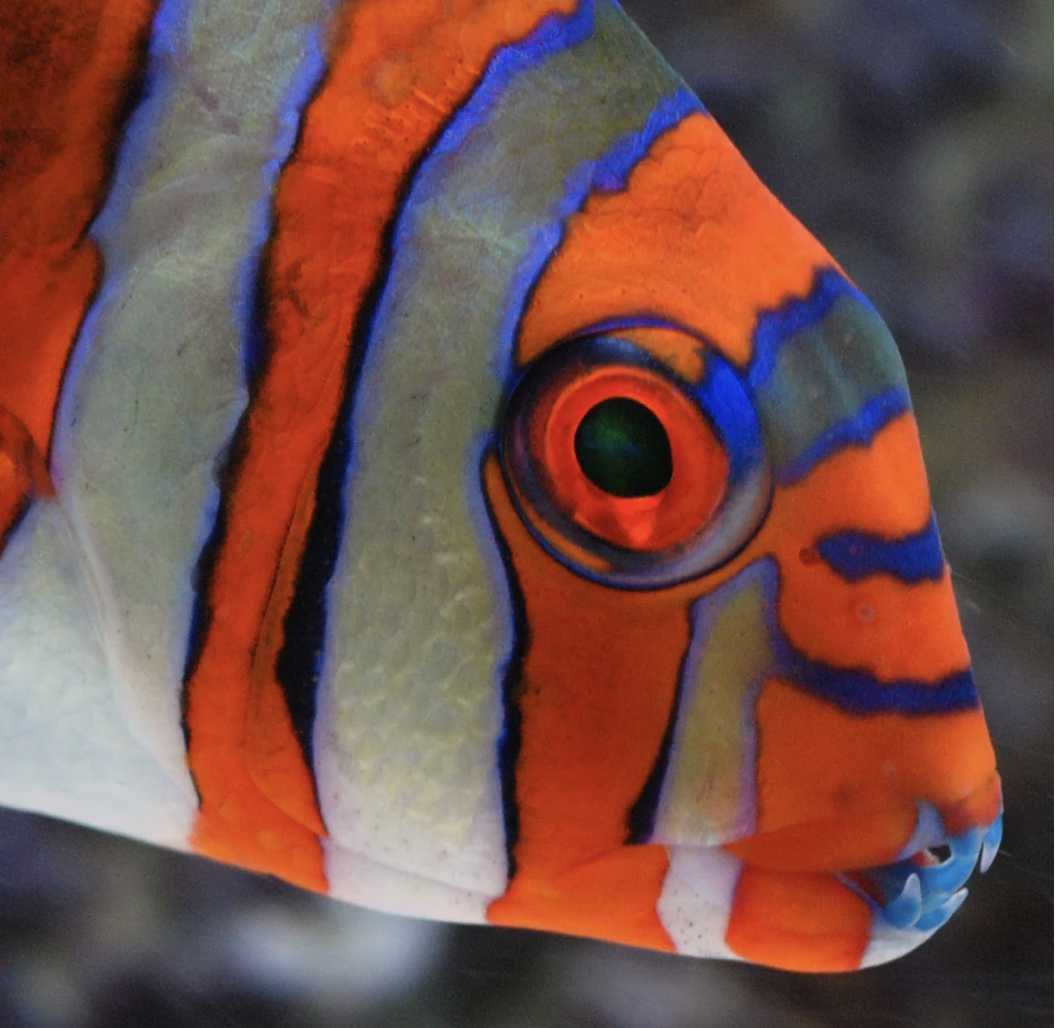
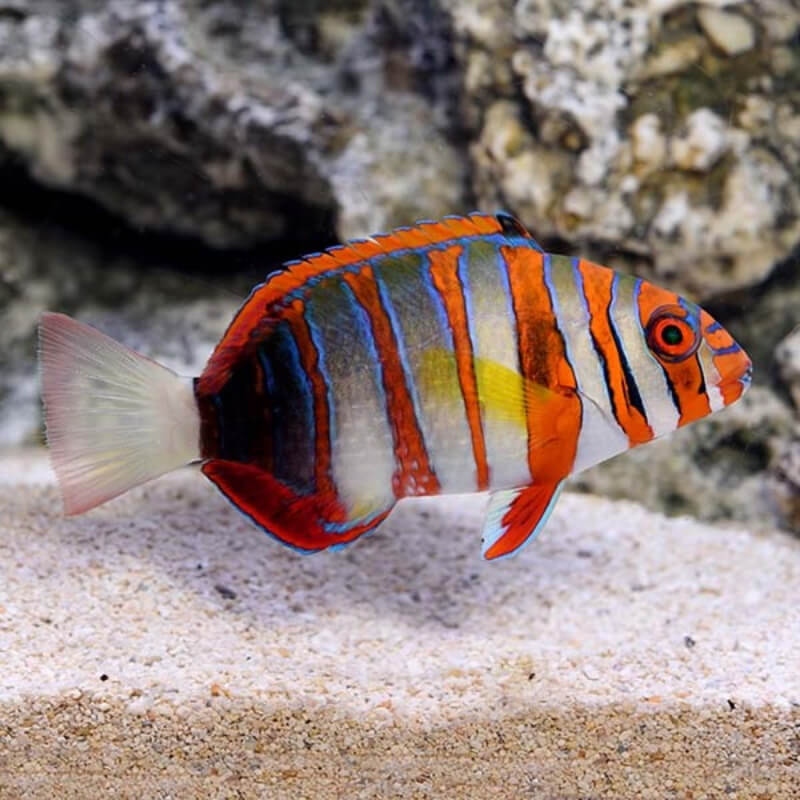
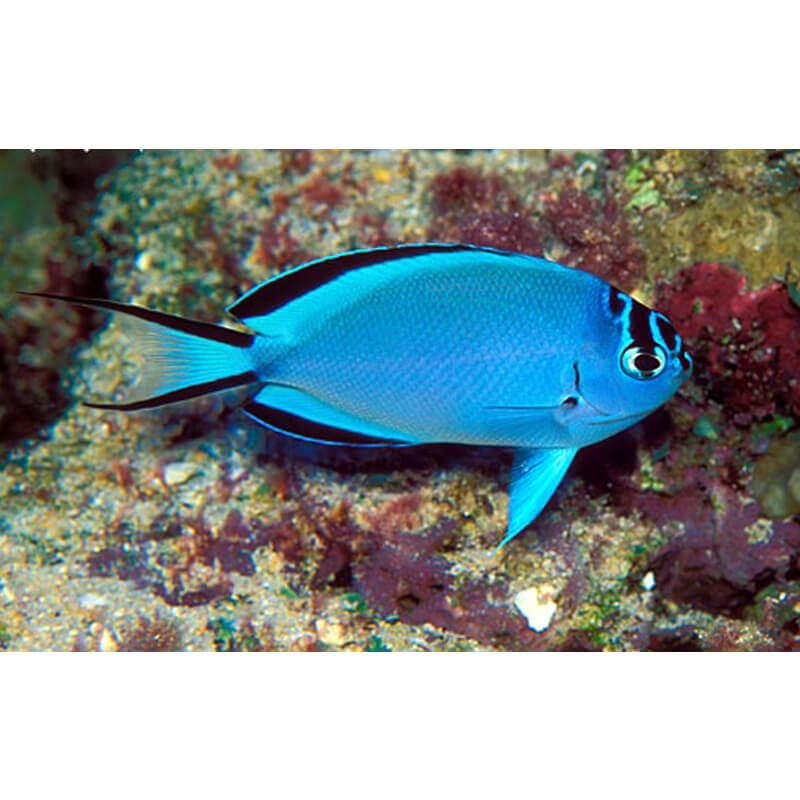
Red Coris Wrasse (Adult) Also known as: Clown Wrasse (Adult), Yellowtail Coris Wrasse (Adult) The adult Red Coris Wrasse undergoes one of the most dramatic transformations in the aquarium hobby. Unlike the brilliant orange-red juveniles with white saddles, adults display an entirely different appearance with a bluish-gray body adorned with vibrant yellow spots and markings. These are large, powerful, active fish that require substantial tank space and careful tankmate selection. Adults are aggressive, territorial, and will rearrange aquascaping while hunting for prey. This is a fish for experienced aquarists with large systems who can accommodate a semi-aggressive, rock-moving powerhouse. Key Features Scientific Name: Coris gaimard Common Names: Red Coris Wrasse (Adult), Clown Wrasse, Yellowtail Coris Adult Size: 12-16 inches (can exceed 14 inches in optimal conditions) Lifespan: 15-20 years with proper care Temperament: Aggressive and territorial Reef Compatibility: NOT reef safe; will flip rocks and eat invertebrates Minimum Tank Size: 180 gallons REQUIRED (200 gallons strongly recommended) Experience Level: Advanced; requires large system and aggression management Habitat & Tank Requirements Tank Environment: Large fish-only or FOWLR (Fish Only With Live Rock) system essential. Requires extensive swimming space with securely mounted rockwork. Deep sand bed (4-5 inches) mandatory for burying behavior. Strong water flow appreciated. All rockwork must be extremely secure—adults can move rocks weighing several pounds while hunting. Provide caves and overhangs but ensure structural stability. Water Parameters: Temperature: 72-78°F (22-26°C) Salinity: 1.020-1.025 pH: 8.1-8.4 Ammonia/Nitrite: 0 ppm Nitrate: <20 ppm Excellent water quality essential for long-term health Equipment Recommendations: Heavy-duty filtration appropriate for large messy eaters Quality protein skimmer rated for tank size Strong water circulation (10-15x tank volume per hour) Secure, tight-fitting lid (excellent jumpers) Deep sand substrate (4-5 inches minimum) Robust aquascaping secured with epoxy or marine-safe adhesive Diet & Feeding Red Coris Wrasses are aggressive carnivores with voracious appetites requiring substantial daily portions. Recommended foods include: Primary: Frozen mysis shrimp, frozen krill, frozen silversides Variety: Chopped squid, chopped clams, chopped shrimp, marine fish flesh Essential: Hard-shelled foods (unshelled shrimp, snails, small crabs) 2-3 times weekly Supplements: Vitamin-enriched frozen foods Quality: High-protein, meaty foods in large portions Feeding Frequency: 1-2 times daily with generous portions Special Notes: Adults require hard-shelled foods regularly to maintain healthy beak/teeth. Will hunt and consume any ornamental invertebrates. Excellent appetite; rarely refuses food. Messy eaters that require efficient filtration. Social Structure & Compatibility Adult Temperament: Aggressive, territorial, and dominant Ideal Tankmates: Large angelfish (6 inches) Large tangs and surgeonfish Groupers and larger predatory fish Lionfish and scorpionfish Large triggerfish Other robust, semi-aggressive fish of similar size Incompatible With: Small or peaceful fish (will harass or consume) Other wrasses (extreme aggression) Invertebrates of any kind (will be eaten) Timid or slow-moving fish Similar-shaped or colored fish Reef Safety: NOT REEF SAFE Will flip rocks hunting for prey Consumes all shrimp, crabs, snails, and other invertebrates Can damage coral colonies while rearranging rockwork Suitable only for fish-only or FOWLR systems Notes & Considerations Stunning adult coloration: Bluish-gray body with vibrant yellow spots and markings Yellow highlights on fins and tail Completely different from juvenile appearance One of the most beautiful adult wrasse colorations Pattern intensifies with age and optimal conditions Dramatic transformation from juvenile: Bears NO resemblance to juvenile coloration Transformation occurs gradually over 2-3 years Intermediate stages show mixed juvenile/adult patterns Size, color, and temperament all change completely Large size requires large tank: 180 gallons absolute minimum; 200 gallons strongly recommended Needs extensive open swimming space Cramped conditions cause extreme aggression and stress Cannot be housed in tanks under 180 gallons Aggressive personality: Territorial toward most fish, especially other wrasses Can dominate and bully community tankmates Aggression increases in cramped quarters Requires robust tankmates that can defend themselves May need to be housed with similarly aggressive fish only Rock-moving behavior: Adults flip and move substantial rocks while hunting Can completely rearrange aquascaping overnight Will topple unsecured rockwork (serious safety hazard) All rockwork MUST be secured with epoxy or structural support Can cause rockslides that damage equipment or crack tank glass Sand-burying behavior: Buries in sand at night (normal behavior) May disappear for extended periods when stressed Deep sand bed (4-5 inches) essential for this natural behavior Will emerge for feeding even when buried during day Invertebrate predation: Will hunt and consume ALL ornamental invertebrates Eats shrimp, crabs, snails, starfish, urchins Flips rocks to find hiding prey Not suitable for any system with valued invertebrates Jumping ability: Excellent jumper at all life stages Secure, tight-fitting lid MANDATORY Can jump through small gaps Will jump when startled or during acclimation Hardy and long-lived: Very disease-resistant once established Adapts well to aquarium life Excellent appetite; rarely refuses food Can live 15-20 years (serious long-term commitment) Care considerations: Requires large system and experienced management Best for advanced aquarists with 180 gallon systems Not suitable for community reef tanks Plan for 15-20 year commitment to large, aggressive fish Messy eater requiring efficient filtration May be difficult to remove from established systems due to rock-burying Native habitat: Indo-Pacific coral reef regions Found in lagoons and outer reef slopes Juveniles in shallow areas; adults in deeper waters Availability & cost: Adults rarely available in trade Most aquarists raise juveniles to adulthood Moderate to high pricing when available Some aquarists rehome adults due to size/aggression Why Choose a Quarantined Red Coris Wrasse (Adult)? Purchasing a quarantined adult specimen means starting with a fully transformed, established fish. All adults are observed for aggression levels, treated as needed, and confirmed as excellent feeders before sale. Proper quarantine is important for adults as they can be stressed during transport and may require deworming. Only purchase if you have a 180 gallon system with robust tankmates and can commit to housing a large, aggressive, rock-moving fish for 15-20 years. Secure lid mandatory. All rockwork must be secured before introduction.