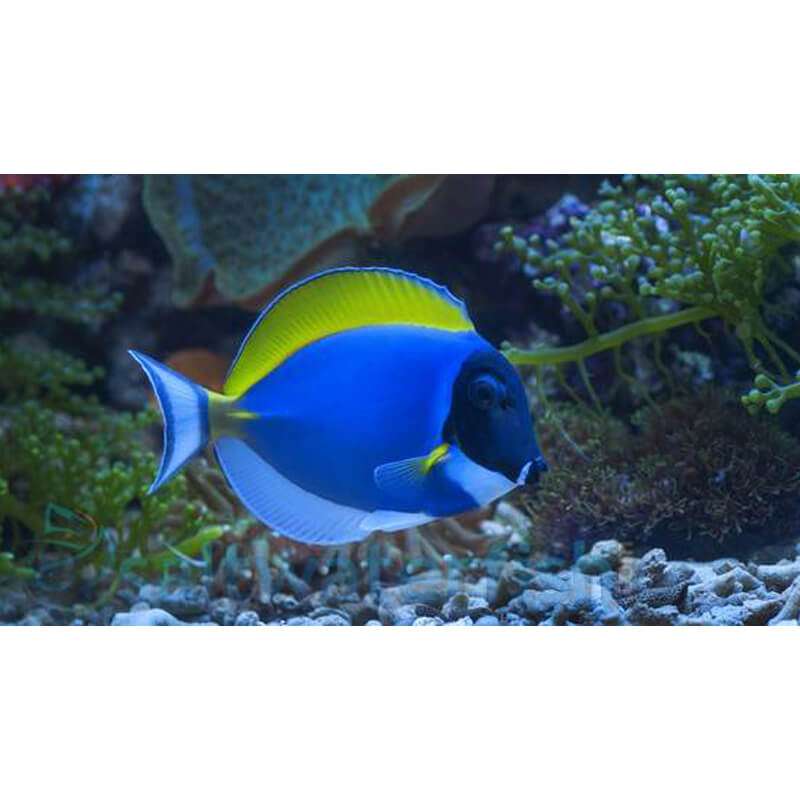
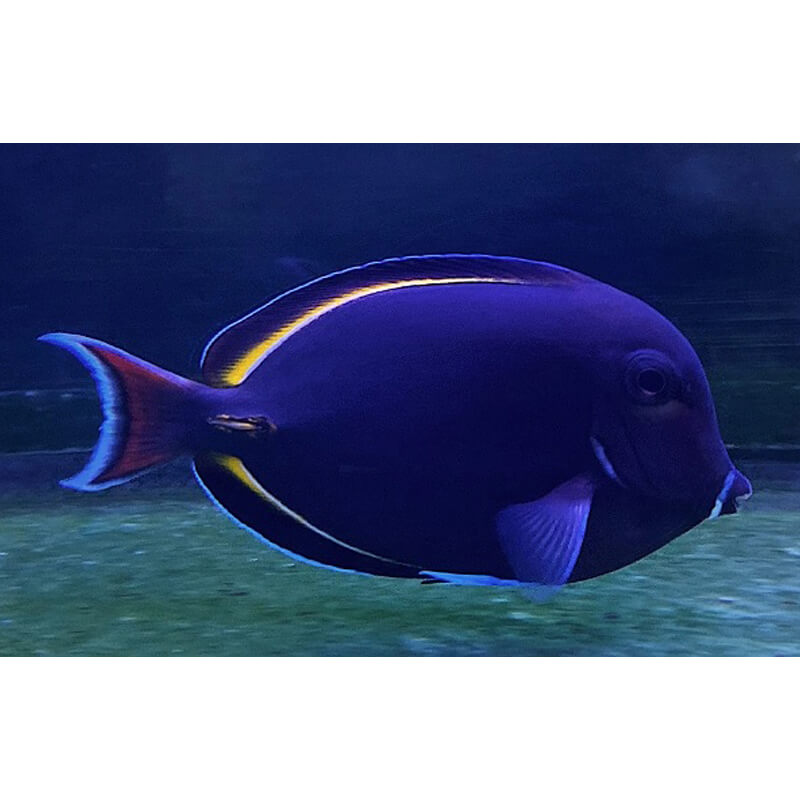
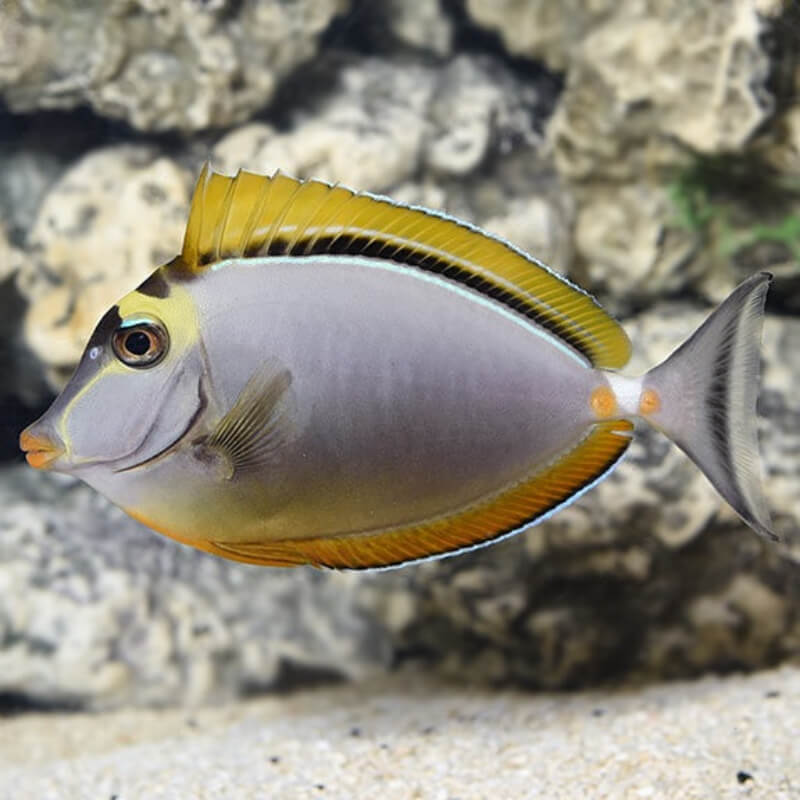
Atlantic Blue Tang (Adult) Also known as the Caribbean Blue Tang or Doctorfish. The Atlantic Blue Tang is a stunning surgeonfish native to the warm tropical waters of the Caribbean and Western Atlantic. While juveniles display a vibrant yellow coloration, adults transform into deep cobalt blue with subtle facial markings and a distinct scalpel at the base of the tail. Active, hardy when acclimated, and constantly grazing, this species adds beauty, movement, and personality to large reef aquariums. A quarantined adult specimen adapts more easily and thrives in well-maintained systems with plenty of swimming space. Key Features Scientific Name: Acanthurus coeruleus Common Names: Atlantic Blue Tang, Caribbean Blue Tang, Blue Doctorfish Adult Size: 8–10 inches (20–25 cm) Lifespan: 10–12 years with proper care Temperament: Semi-aggressive; territorial with similar-shaped tangs Reef Compatibility: Reef-safe – will not harm corals or invertebrates Minimum Tank Size: 125 gallons (180 gallons recommended) Experience Level: Intermediate to Advanced – needs stable water, space, and constant grazing Habitat & Tank Requirements Natural Habitat: Found across the Caribbean Sea, Florida reefs, Bermuda, and the Gulf of Mexico. Adults reside on rocky outcrops, shallow reefs, and areas with abundant algae growth. Tank Environment: Large open swimming space Mature tank with natural rockwork Constant availability of algae or grazing surfaces High oxygen levels and strong flow UV sterilizer recommended for parasite prevention Water Parameters: Temperature: 74–80°F (23–27°C) Salinity: 1.023–1.025 pH: 8.1–8.4 Ammonia/Nitrite: 0 ppm Nitrate: <15 ppm Alkalinity: 8–12 dKH Essential Equipment: Oversized protein skimmer High-flow pumps or gyres UV sterilizer Auto-top-off for salinity stability 10–15% weekly or 20% biweekly water changes Diet & Feeding Atlantic Blue Tangs are herbivores that graze throughout the day. A varied diet is essential for color, immunity, and digestive health. Recommended Foods: Nori (green, red, brown varieties) Spirulina-rich pellets and flakes Marine algae sheets Frozen herbivore blends Occasional mysis or brine shrimp for variety Vitamin and garlic-enriched foods Feeding Schedule: Feed 2–3 times daily Keep a nori clip available Provide mixed foods to support long-term health Behavior & Compatibility Temperament: Active, bold, and territorial toward similar-shaped tangs, especially other Acanthurus species. Generally peaceful with most reef-safe fish. Tank Mates: Compatible with: Wrasses Gobies Blennies Anthias Chromis Peaceful community fish Caution with: Other tangs of similar body shape Surgeonfish added after the Atlantic Blue Tang Avoid: Aggressive triggers Large groupers Multiple adults in small tanks Color & Development Coloration Characteristics: Deep cobalt blue body Subtle dark facial lines Blue-edged fins White or pale blue caudal spine (scalpel) Color Intensity: Color deepens with proper algae-rich diet, stable water, and low stress. Size & Growth: Juveniles start as bright yellow, transitioning to blue as they age. Adults reach 8–10 inches and need ample swimming space. Acclimation & Care Tips Initial Acclimation: Drip acclimate for 45–60 minutes Float bag for temperature equalization Dim lights during introduction Offer nori immediately to encourage feeding Reduce aggression with acclimation boxes if needed Health Considerations: May be prone to: Marine ich (Cryptocaryon) Marine velvet (Amyloodinium) Lymphocystis HLLE if diet or water quality is poor Quarantined adults adapt far more reliably. Signs of a Healthy Specimen: Active, constant swimmer Strong appetite Clear eyes Smooth fins with no tears Deep, even blue coloration No flashing or labored breathing Special Considerations Quarantine is Recommended: Wild-caught Atlantic Blue Tangs are often exposed to parasites and stress during collection. Dr Reef’s strict quarantine ensures: Several weeks of observation Preventative treatments when needed Transition to prepared foods Stabilization before shipment Breeding Potential Breeding the Atlantic Blue Tang in home aquariums is extremely rare due to their need for open-water spawning, large groups, and precise environmental conditions. While they may exhibit natural social behaviors, successful spawning events are not typically seen in captivity. Why Choose a Quarantined Atlantic Blue Tang? A quarantined specimen is healthier, hardier, and better prepared for life in an aquarium. Proper conditioning dramatically increases survival, reduces disease risk, and makes acclimation smoother for this active and striking species.