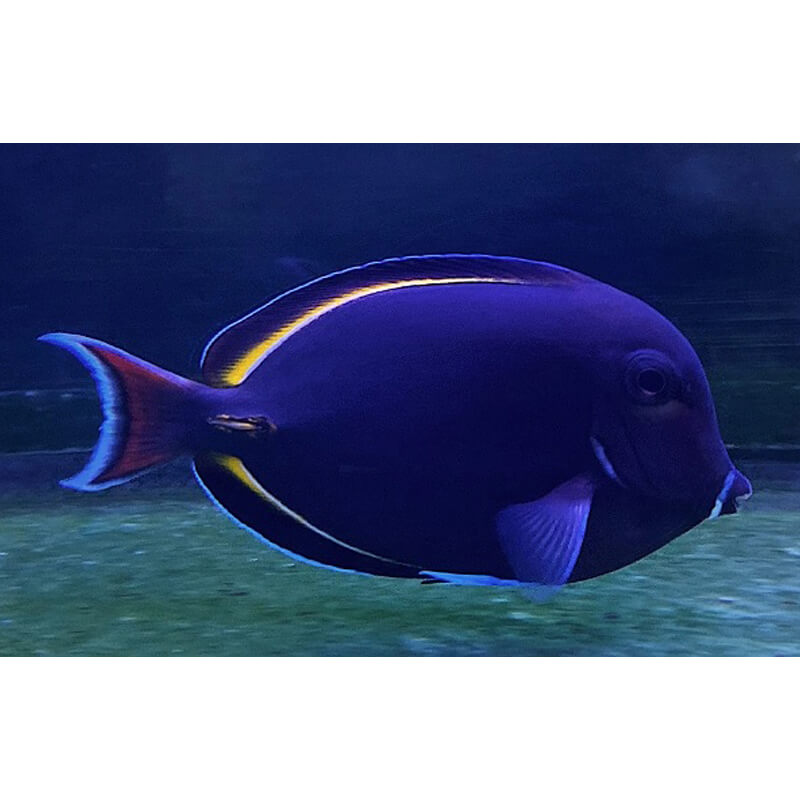
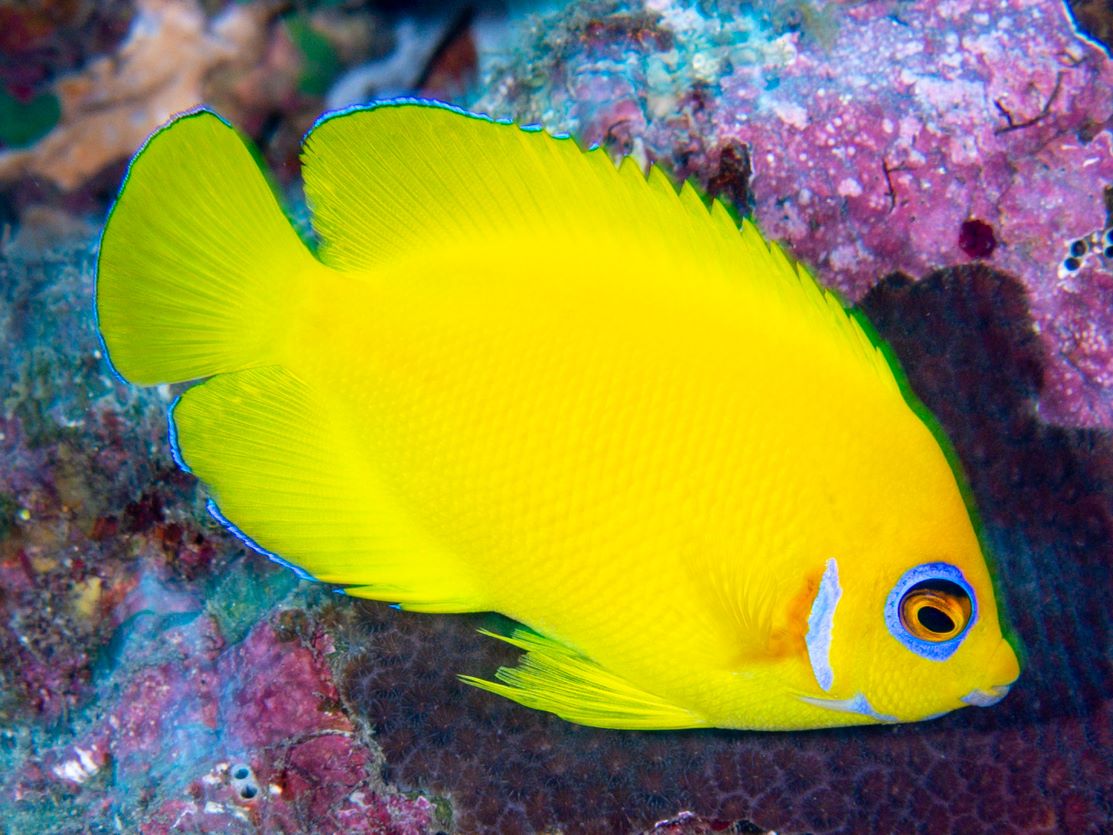
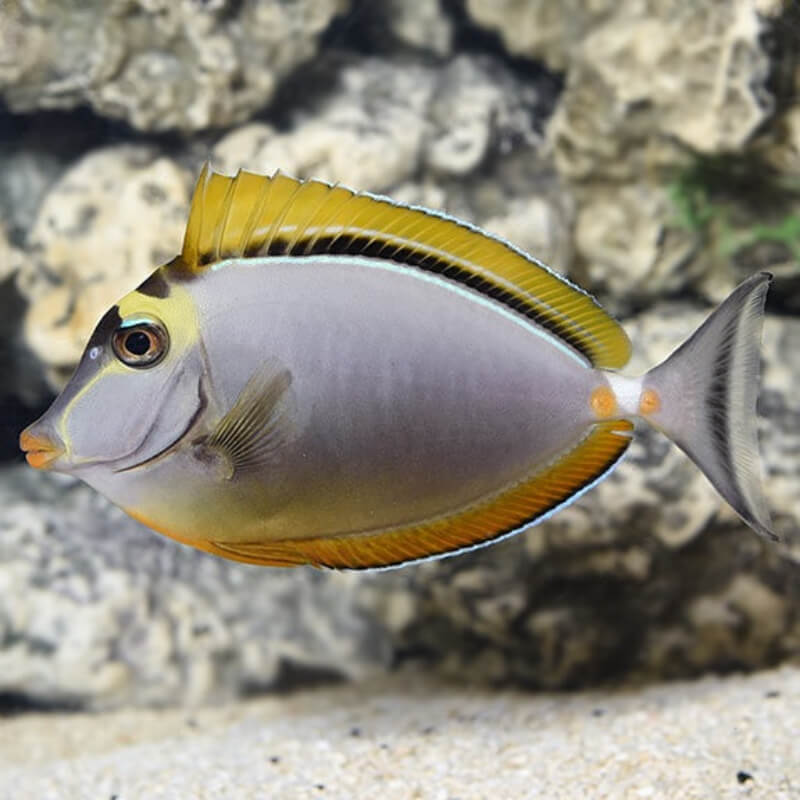
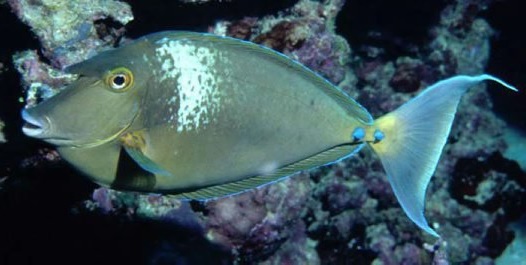
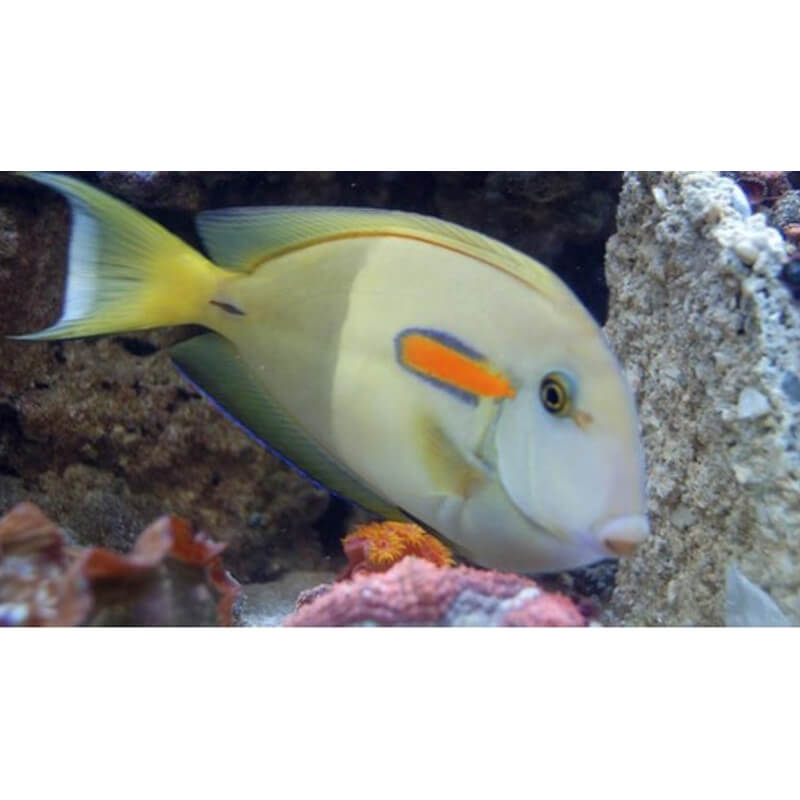
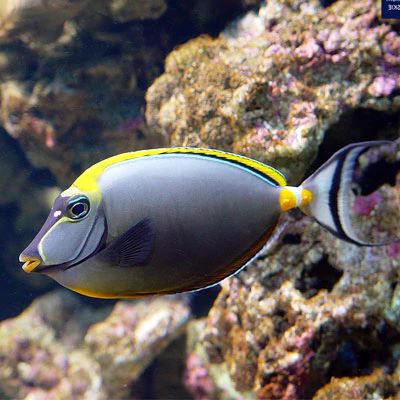
Orange Shoulder Tang Also known as the Orangespot Surgeonfish or Orangeband Surgeonfish. The Orange Shoulder Tang is a calm and elegant surgeonfish known for its dramatic color transformation. Juveniles are pale yellow to gray, while adults develop a deeper slate-blue body with a bright orange shoulder patch. Found throughout the Indo-Pacific, this species is peaceful, active and highly efficient at grazing algae. It is well suited for large aquariums where it can swim freely and thrive in stable marine conditions. Key Features Scientific Name: Acanthurus olivaceus Common Names: Orange Shoulder Tang, Orangespot Tang, Orangeband Surgeonfish Adult Size: 13 to 14 inches Lifespan: 10 to 15 years or more Temperament: Peaceful and generally non aggressive except toward similar tang species Reef Compatibility: Reef safe and does not disturb corals or invertebrates Minimum Tank Size: 180 gallons Experience Level: Intermediate Habitat and Tank Requirements Natural Habitat: Lives in shallow lagoons, reef slopes and sandy coastal areas of the Indo-Pacific. Constant grazer of marine algae. Tank Environment: ● Large open swimming space ● Moderate to strong water flow ● Live rock for natural grazing ● Mature systems preferred with at least 6 months stability Water Parameters: ● Temperature: 74 to 82°F ● Salinity: 1.023 to 1.025 ● pH: 8.1 to 8.4 ● Ammonia and Nitrite: 0 ppm ● Nitrate: under 20 ppm ● Alkalinity: 8 to 12 dKH Essential Equipment: ● Efficient protein skimmer ● Strong biological and mechanical filtration ● Reef compatible lighting ● Routine water change of 10 to 15 percent weekly Diet and Feeding Orange Shoulder Tangs are herbivores that graze frequently. Recommended Foods: ● Nori sheets offered daily ● Spirulina and algae pellets ● Seaweed blends ● Frozen herbivore mixes ● Enriched algae sheets for color improvement Feeding Schedule: ● Feed 2 to 3 times per day ● Provide seaweed clips for steady grazing ● Rotate foods to support immune health and natural color Behavior and Compatibility Temperament: Peaceful and steady swimmer. Rarely aggressive except toward tangs with similar shapes and feeding habits. Tank Mates: ● Wrasses, gobies, anthias and chromis ● Other peaceful tangs in very large tanks ● Avoid highly aggressive surgeonfish ● Avoid predators Pairing Behavior: Best kept singly unless the tank exceeds 300 gallons. Reef Compatibility Safe for all corals and reef invertebrates. Helps manage algae growth through constant grazing. Acclimation and Care Tips Initial Acclimation: ● Drip acclimate for 45 to 60 minutes ● Float the bag for 15 to 20 minutes ● Keep lighting dim during release Health Considerations: ● Can be sensitive to ich, velvet and flukes ● Benefits greatly from a 2 to 3 week quarantine Signs of a Healthy Fish: ● Smooth body ● Vibrant orange shoulder marking ● Active swimming ● Strong appetite Color and Development Coloration: ● Juveniles: pale gray or yellow with faint markings ● Adults: deep slate-blue with a bright orange shoulder band ● Fins: gray to charcoal with soft contrast Color Influences: ● High quality herbivore diet improves the orange patch ● Good lighting highlights body shading ● Stress may dull tones temporarily Size and Growth: ● Juveniles begin at 2 to 4 inches ● Adults reach 13 to 14 inches ● Needs large horizontal space to grow properly Special Considerations Quarantine Recommended: Ensures strong feeding, disease inspection and smooth transition into the display tank. Captive Bred Notes: Captive bred Orange Shoulder Tangs are extremely rare. Most specimens are wild caught but adapt well with proper care. Breeding Potential Captive breeding is extremely rare. These fish spawn in open water and require very large environments that simulate ocean conditions. Why Choose a Quarantined Orange Shoulder Tang A quarantined Orange Shoulder Tang from Dr. Reef arrives strong, healthy and already eating. This greatly reduces stress and ensures a better transition into your display tank. Its peaceful nature, algae grazing ability and striking adult coloration make it a standout addition to large reef and FOWLR systems.