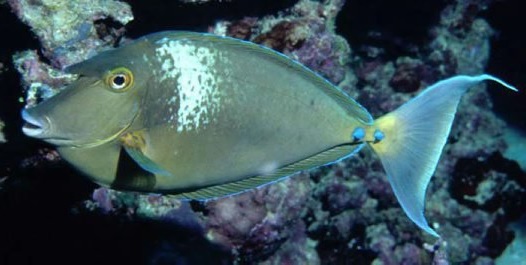
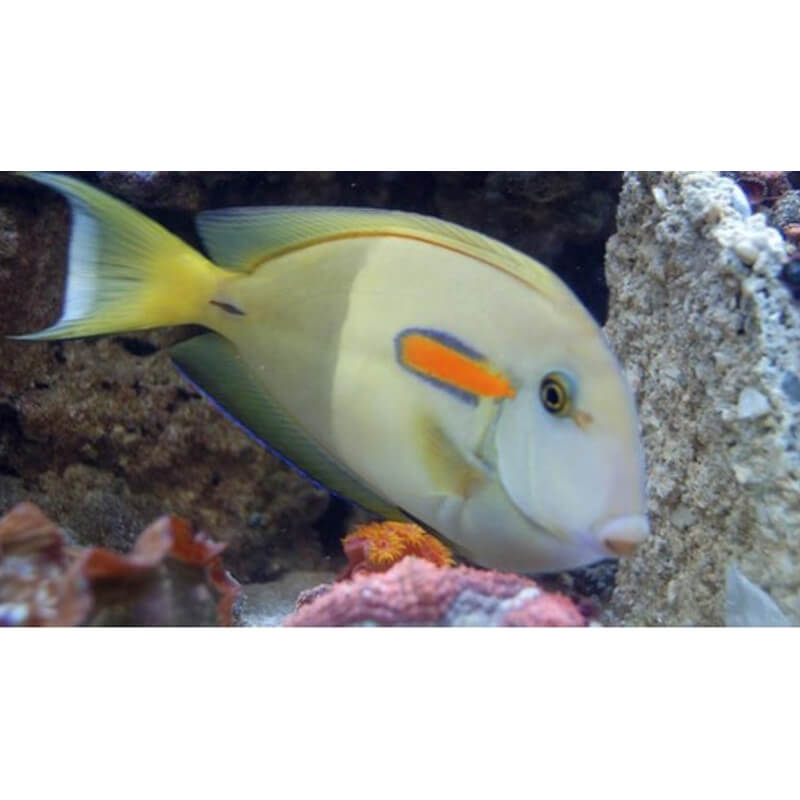
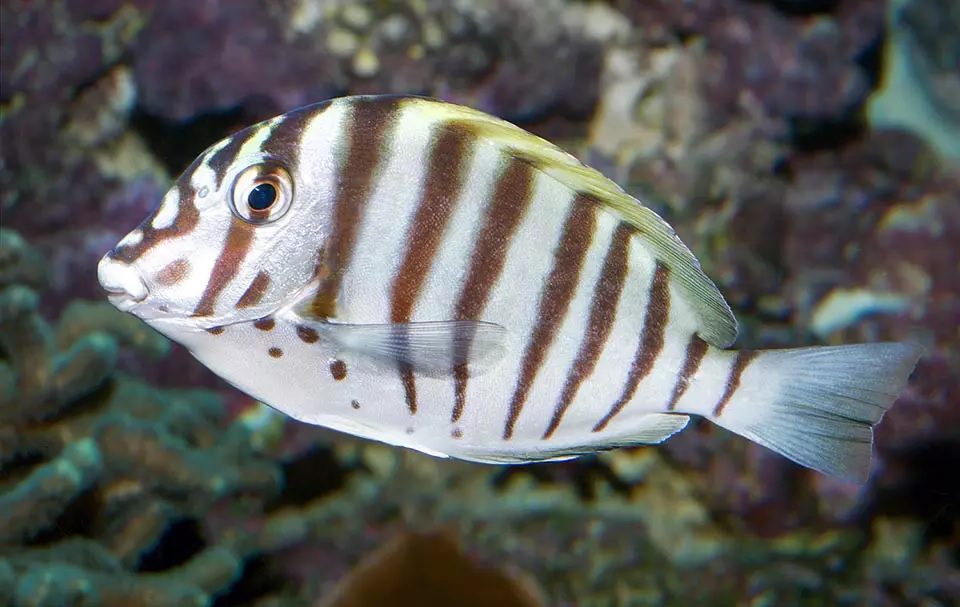
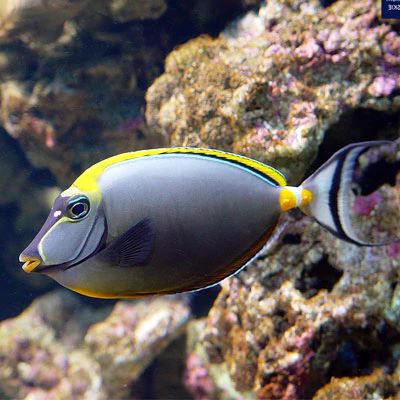
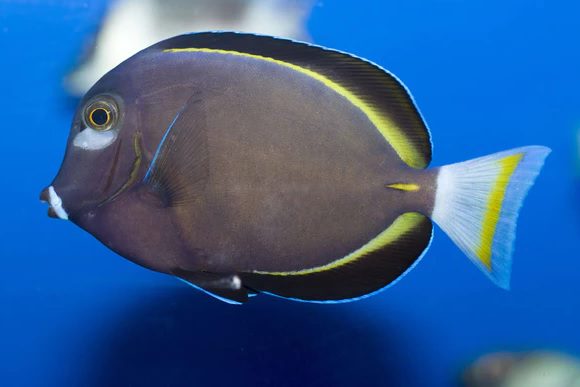
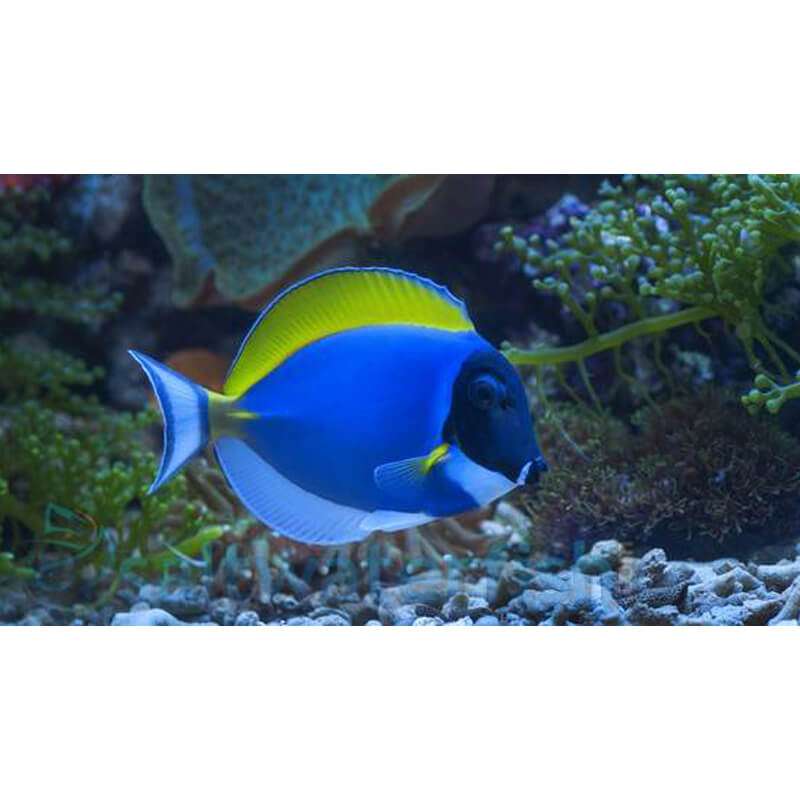
Blue Unicorn Tang Also known as the Spotted Unicornfish or Short-Nose Unicorn Tang. The Blue Unicorn Tang is a striking, elegant reef fish native to the Indo-Pacific region. Known for its powder-blue body, elongated shape, and signature “nasal bump” that develops with age, this species is a graceful swimmer and an eye-catching centerpiece in large aquariums. Hardy, peaceful, and captivating in motion, it is a favorite for advanced hobbyists who can provide ample space and proper care. Key Features Scientific Name: Naso brevirostris Common Names: Blue Unicorn Tang, Spotted Unicornfish, Short-Nose Unicorn Tang Adult Size: 18–24 inches (45–60 cm) Lifespan: 15–30 years with proper care Temperament: Semi-aggressive; generally peaceful but may establish dominance around similar tangs Reef Compatibility: Reef-safe, will not harm corals or invertebrates Minimum Tank Size: 360 gallons Experience Level: Intermediate to Advanced, requires space, strong water flow, and stable water parameters Habitat & Tank Requirements Natural Habitat: Found on outer reef slopes and coastal reefs at depths of 10–100 feet, often swimming in small groups while grazing on algae. Tank Environment: Large open swimming space is essential Strong water movement and high oxygen levels Ample live rock for grazing Secure lids to prevent jumping Mature, stable system preferred Water Parameters: Temperature: 74–80°F (23–27°C) Salinity: 1.023–1.026 specific gravity pH: 8.1–8.4 Ammonia/Nitrite: 0 ppm Nitrate: <20 ppm Alkalinity: 8–12 dKH Essential Equipment: Oversized protein skimmer Strong circulation pumps High-capacity biological filtration Auto top-off system UV sterilizer recommended Diet & Feeding Blue Unicorn Tangs are primarily herbivores with a high metabolism, requiring constant grazing and nutrient-rich diets. Recommended Foods: Dried nori (daily) Spirulina-based pellets and flakes Frozen herbivore blends Macroalgae (red, green, brown) Occasional mysis or brine shrimp for variety Enrichment: Vitamin-soaked foods Marine algae sheets clipped in tank Multiple feeding stations for grazing Feeding Schedule: 2–3 times daily Small portions that can be consumed in 2–3 minutes Behavior & Compatibility Temperament: Active swimmer, constantly grazing Semi-aggressive but usually peaceful May show dominance with similar tangs Tank Mates: Compatible with: Anthias, fairy wrasses, gobies, chromis, large angels, peaceful tangs Caution with: Other unicornfish, aggressive tangs Avoid: Small timid fish, predatory groupers Pairing Behavior: Can be kept singly or in small groups if tank is large Generally social with non-aggressive species Established pairs may bond and show grazing synchronization Reef Compatibility: Reef-safe Does not nip corals Helps control algae growth Acclimation & Care Tips Initial Acclimation: Drip acclimation for 45–60 minutes Float bag for temperature equalization Dim lights during introduction Provide ample open space Health Considerations: Prone to ich and velvet if stressed Requires constant grazing and high oxygen Quarantine is recommended for new additions Signs of a Healthy Specimen: Constant swimming and grazing Bright eyes, smooth skin Strong appetite No flashing or scratching Color & Development Coloration Characteristics: Body: Powder-blue to slate-gray Fins: Transparent to bluish-gray Nasal bump develops with age Tail: Long and elegant Color Intensity: High-quality diet maintains vibrant blue Proper lighting enhances natural tones Stress or poor water quality may dull color Size & Growth: Rapid growth in first 2–3 years Juveniles start at 4–6 inches Full adult size: 18–24 inches Special Considerations Space & Flow: Essential for swimming and health; small tanks cause stress Diet & Grazing: Needs constant algae and herbivore nutrition Captive Behavior: Gentle, active, and visually stunning Not Ideal for Small Tanks: Requires large open areas even as juveniles Breeding Potential: Though rarely bred in home aquariums, established pairs may display courtship and bonding behaviors in large, stable systems, offering hobbyists a glimpse into their natural reproductive behavior. Why Choose a Quarantined Blue Unicorn Tang? A properly quarantined Blue Unicorn Tang ensures a healthy, stress-free, and vibrant specimen ready to thrive in large marine aquariums. Our quarantine protocol includes health observation, preventative treatment when necessary, dietary conditioning, and acclimation, providing confidence that your new tang will grow, graze, and flourish in its new home.